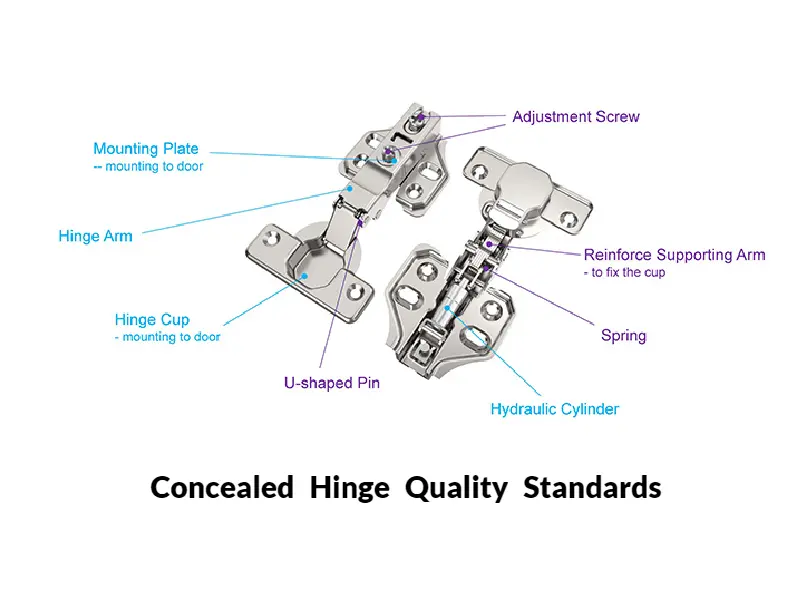
Most people see a cabinet hinge as just a small metal part.
But that small part does a big job—holding your cabinet door, letting it open smoothly, and helping it close quietly without slamming.
As a professional hinge distributor, we like to explain things in a simple way, so anyone can understand how a hydraulic hinge works.
Let’s break it down.
The 3 Main Parts of a Hydraulic Hinge
Every cabinet hinge has three main parts. If these are good quality, the door will work well.
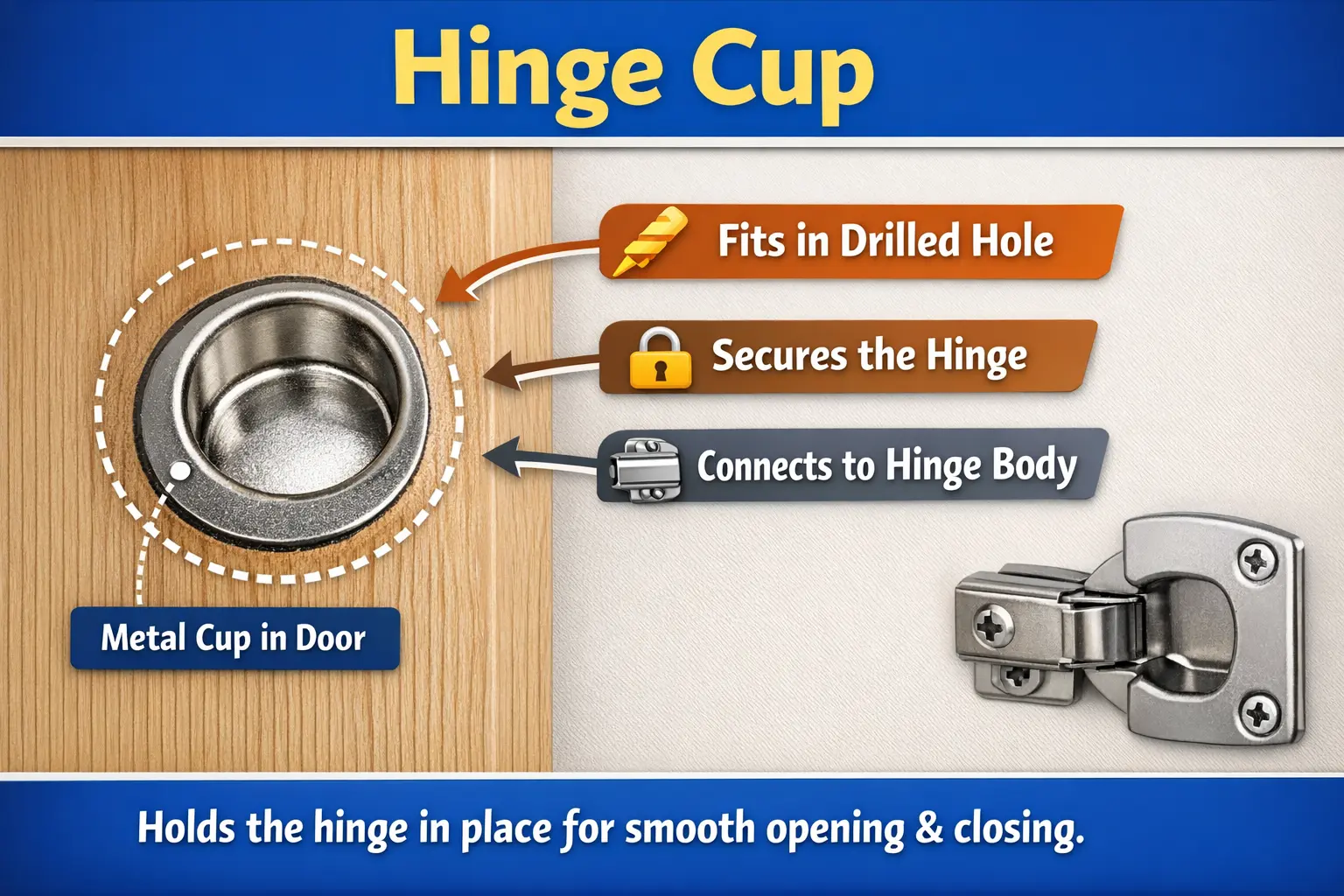
1. Hinge Cup
This is the round metal part that goes into the cabinet door.
Its job is simple: hold the hinge firmly on the door.
2. Hinge Body
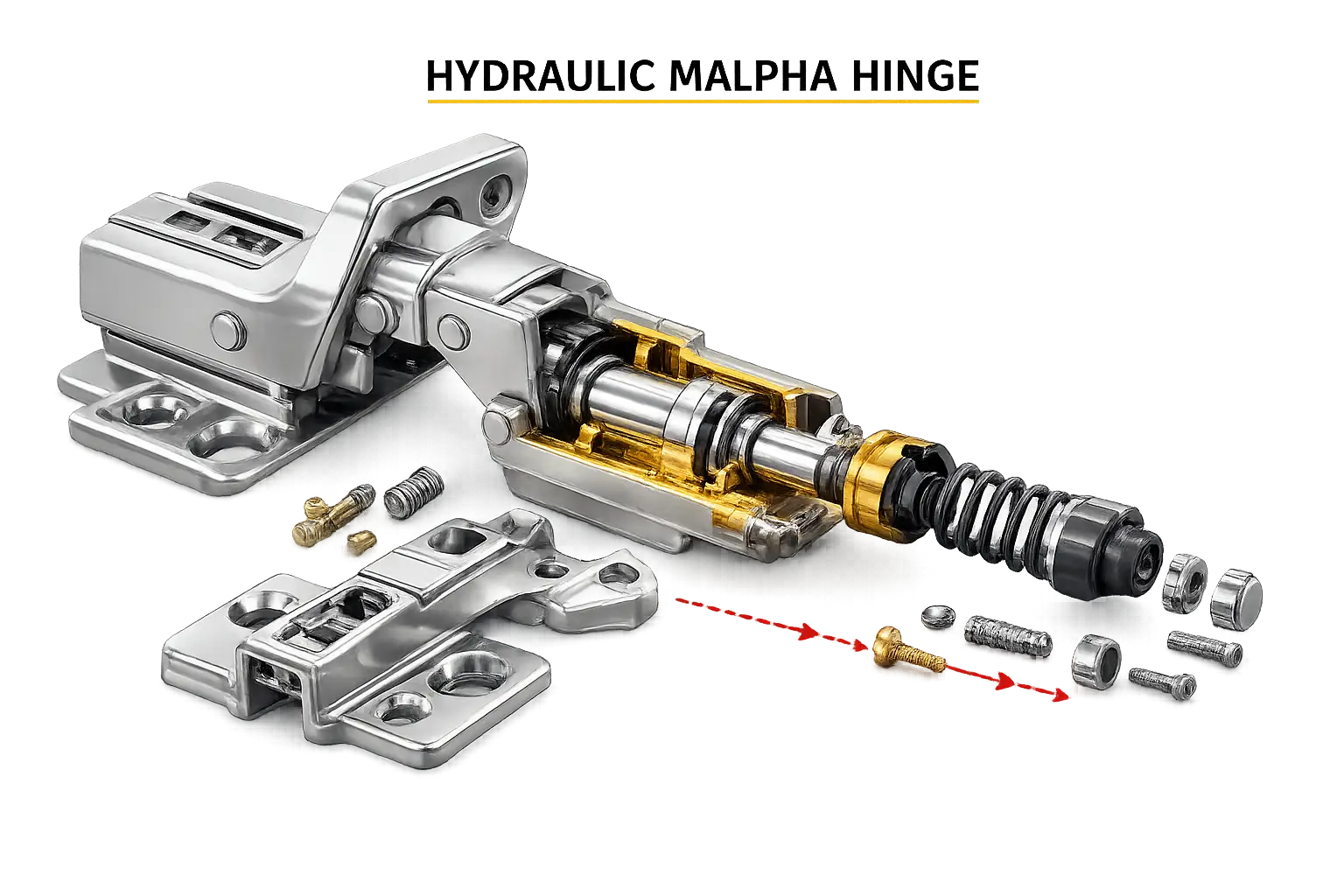
This is the arm of the hinge.
It controls how the door opens and closes and supports the door thickness.
3. Hinge Base
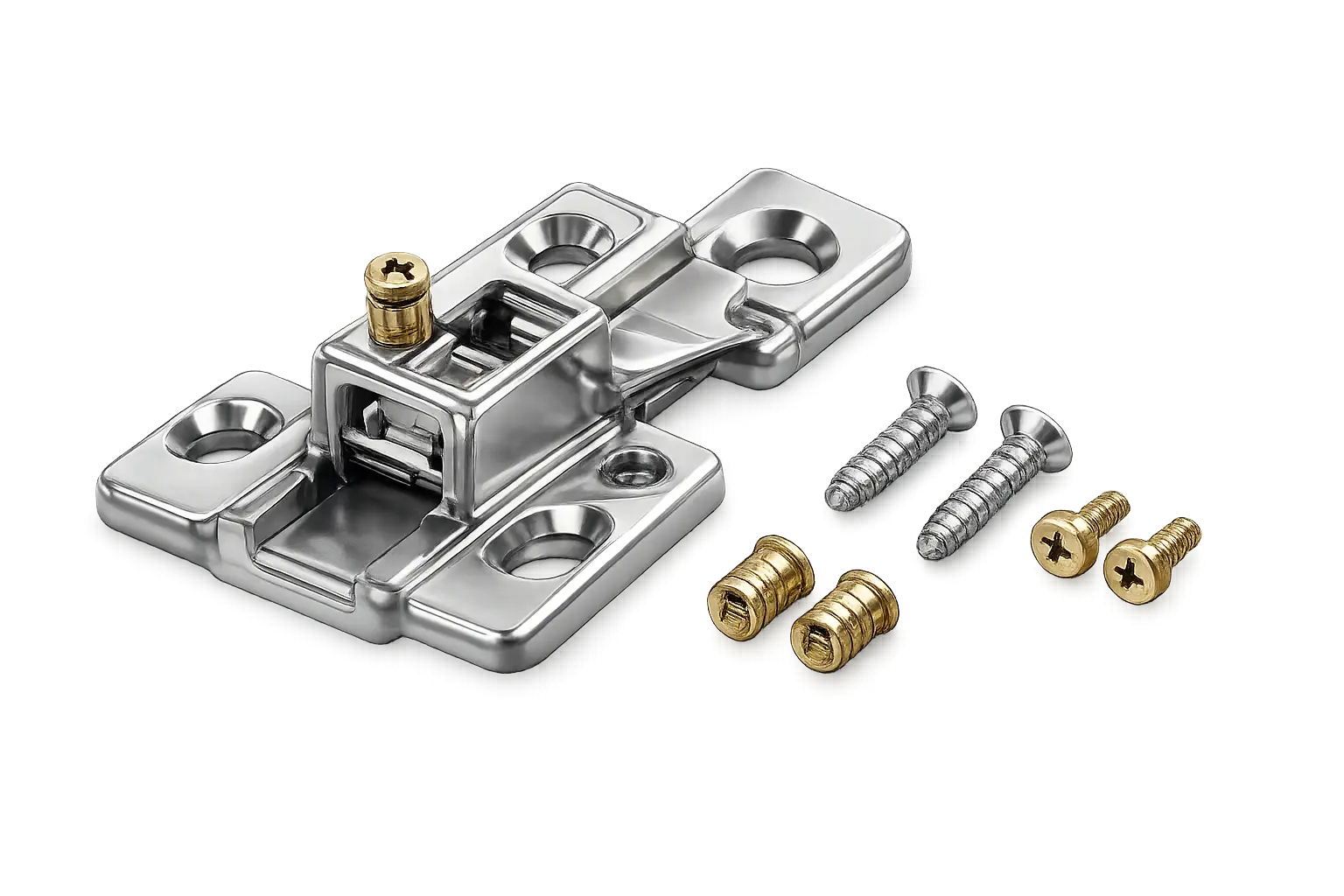
This part is fixed inside the cabinet.
It connects the door to the cabinet body and keeps everything stable.
Together, these three parts make sure the door opens properly and stays in place.
The Small Parts That Make a Big Difference
Inside the hinge are smaller parts that most people never notice—but they matter a lot.
- Connection piece – Carries the weight of the cabinet door
- Spring – Helps the door close smoothly
- U-shaped nails & rivets – Hold all the metal parts together
- Adjustment screws – Help you align the door after installation
- Hydraulic pump – Slows the door down for soft, quiet closing
These parts are the reason a good hinge feels smooth and strong, while a poor one feels loose or noisy.
Why Quality Hinges Matter
When a hinge is poorly made:
- Doors sag
- Doors slam
- Cabinets lose alignment
- Repairs become frequent
A good hydraulic hinge:
- Holds the door firmly
- Moves smoothly
- Allows easy adjustment
- Closes slowly and quietly
That’s comfort, durability, and value—all from a small component.